

Waterfowl and Frostbite

I've basically left Facebook, except to check in on our farm business page. The past few days when I log in, I'm seeing posts about waterfowl having frostbite and what to do.
Some people in a warmer climate than Canada will tell you it's impossible for waterfowl to get frostbite as they have a counter-current blood flow (I've blogged about that and you can find it in my Duck and Geese section). While their counter-current blood flow does help to regulate the heat loss from their feet and even their legs it is not enough to fully stop frostbite on it's own.
Frostbite isn't all that uncommon in birds here in Canada, and if you search on Google Scholar you can find studies and articles wrote about birds in the northern parts of North America. Wild and domestic birds, ducks and geese are among the many species studied here concerning frostbite.

We do have a duck that came to us missing toes and webbing on her one foot due to frostbite. We have never had our own case of frostbite here at the Mini Farm. I've looked into frostbite as extensively as I can, so that I could try to avoid it for my own flock. Let me note here that a bird that has had frostbite on their feet before and recovered will need a bit of extra care in the future winters as they will be more prone to getting it again.
I won't go into the science behind the stages of frostbite and where you can and cannot intervene and still have a successful outcome. I will say if caught late then it's my opinion that if it is too extensive culling would be the more humane thing to do. For me that would be if the skin is shriveled and sluffing off profusely all over the entire foot. If the whole foot is going to be lost and perhaps part of the leg I personally would put that bird out of it's misery. I'm sure I will have people condemn me for saying that. But the way I see it, at some point in animal husbandry you are going to have to put the tender human emotions aside and think about that animal and what will be best for the animal. If the animal cannot get around on its own, do you have the time to aid it day in and day out or will it live confined to a small kennel where it can reach its feed and water without walking? I'm a huge animal lover and the people who personally know me can attest to that, but if an animal cannot get around in a natural way then I think it more humane to cull them. You will have the hard task of considering their quality of life in the future while putting your emotions aside.
It can take 4-6 weeks or more for a bird to recover from frostbite, during this time they need to be kept in the warmth. If you are not going to provide them with heat or bring them inside to treat them, then again it would be more humane to cull them. Now that we got the triggering talk of culling out of the way lets get into the preventatives!

Like I said before, we have never in all our years had a case of frostbite happen under our watch. If you look into frostbite, not only in birds but mammals as well, it's usually not just the cold to blame. The cold paired with moisture (humidity), the cold paired with wind, or all three together are to blame. I've spoken to people who had birds get frostbite in -15C, that's not even a cold winter day here in Canada! We can and do get down to -40C and can even get cold snaps into the -50's C. From the people I've spoken too and tried to help or tried to learn from their experience it's always been one of two situations; cold and wind or cold and humidity.
The good news is you can control both humidity/moisture and wind to an extent for your birds. That is all we do, we control what we can to make a better environment for our waterfowl through the long winters.
First up, humidity/moisture. We do not water inside our coops, unless it is below -50C and the birds need to stay locked in. Yes you read that right our birds go outside to eat and drink unless it's colder than -50C every single day of winter. By watering outside only and away from the coop door/venting we are able to help keep the inside of the coop the same or lower than the ambient humidity outside. We also have very good venting in our coops. Our venting in the coops is all up higher than the birds level, not only does humidity rise, but this also helps with the second thing wind. Vents higher will create a draft higher in the coop and help push/pull humidity out of the coop while keeping the ground level draft free for the birds.
Our birds have access to buckets that are too tall for them to get into, but short enough for them to dunk their heads fully. I mean they really could get into them if they wanted to, but that rarely if ever happens here. They do not get bathing water unless it is above -10C and not windy or in a wind-break area. However, they can still splash water onto their backs and preen. We have trenches under the pallets our waters are on that take in that splashed water so their whole enclosure is not getting wet. Our birds do get access to swim in pools at least once every month and I will watch the weather and plan the best day for it. I feel this helps to keep their feathers in optimal condition through our long winters. But, that's a topic for a future blog.

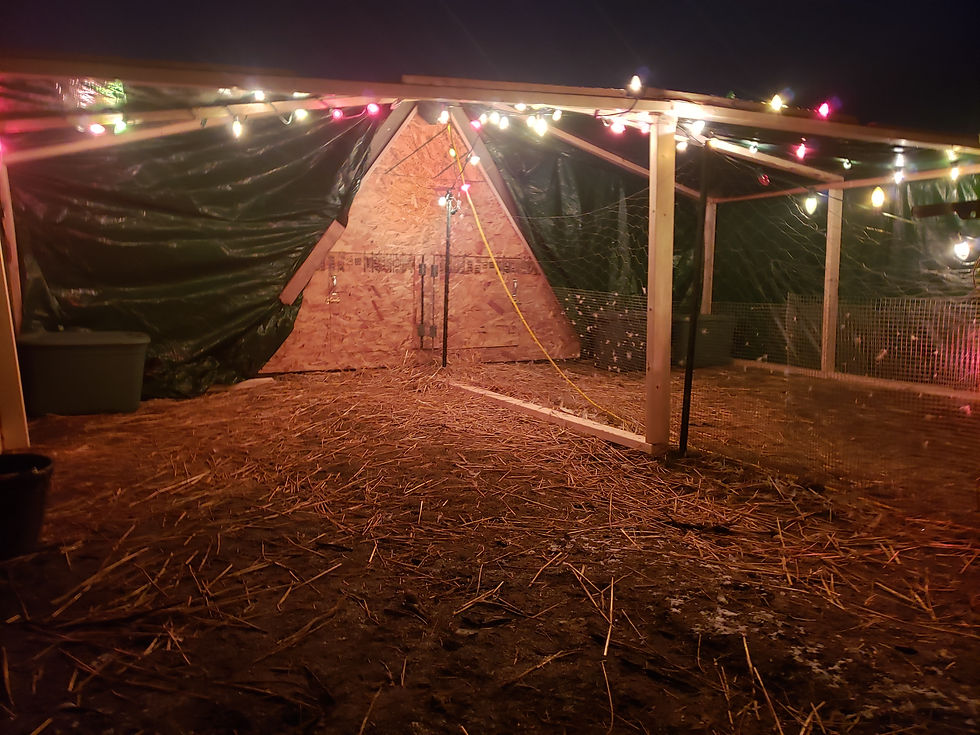
Second thing, wind blocks/proper venting. You need to keep those vents high as explained above so there is no wind on the birds and their exposed skin. Proper vents and wind-breaks outside are honestly the biggest things I suggest for people when they ask me about winter care and their waterfowl. That can be as simple as having a spruce tree in their pen that they can get under the low laying branches and out of the wind. It can be having their coop right inside their pen so they can get around the whole coop and use the coop itself as a wind-break. You can set up tarps, poly, or wood along the side of their pen or tarp garages. Or you can build them a covered enclosure that can be wrapped with greenhouse poly, 10mil poly, tarps or wood. The choice is yours but I do suggest they have somewhere outside the coop to be without being in the wind. This isn't just for frostbite reasons, this is also due to the wind ruffling their feathers and then they lose the trapped air in the down layer and that is how they regulate their temperature. I have a blog on this called "Fluffing feathers and shaking, what it really means for your waterfowl." if you would like to read about it.
In past years, we always did tarp lean-to's off of our coop that were tarped on 3 sides to prevent most of our winter winds. With the tarp lean-to areas we have always done a roof as well, this stop the snow from accumulating in that area and helps us to control the moisture easier. We fill them with straw, woodchips, and leaves that we had bagged from fall to spread out as needed to keep the birds up off of the snow and ice.

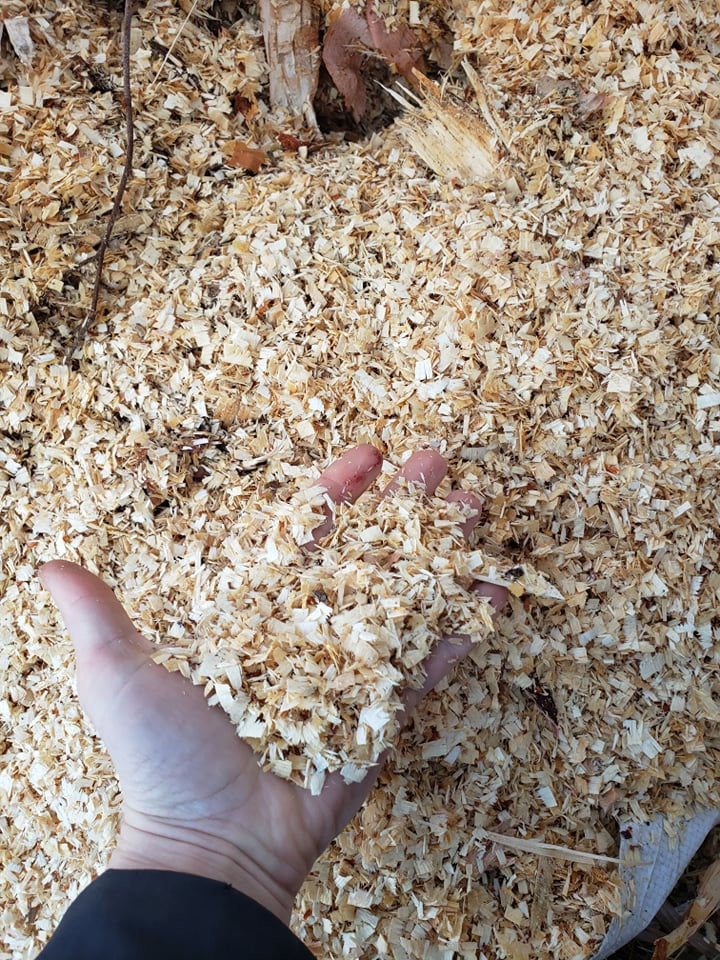
Inside the coops you need to keep them dry in order to help combat humidity, I've found for us a mixture of straw and wood shavings are the best. The wood shavings will soak in a lot of the moisture (ammonia/etc) from the birds better than the straw will. The straw with its hallow shafts is better at picking up the heat loss from the birds themselves and insulating it within it's shafts. We check our coops twice a day, at let out in the AM and again in the PM when we lock up. If they are moist a layer of bedding gets added at that time. I do not do deep bedding inside my coops (enclosures only, I've also made a blog about the benefits of that). I do however, add bedding as needed throughout the week, this could be daily if it's warm enough for them to have their pools out. I then clean out my coops once a week and we start all over. If your birds have nice deep dry bedding to nest down into they will stay much warmer. We adding bedding to the outside windbreak area as well to keep it dry too.
We do not do a 'foot-check' like some people suggest you do often during the winter months. But I do watch every single bird come out of their coop in the AM and I watch them run around to their feed and water or just run around flapping their wings. While we do have a lot of birds, since we breed them, I still know each one of my birds individually and I watch them enough that I notice as soon as anything seems off. For example, a bird that is usually one of the first ones out is now at the back of the flock or isn't coming out at all would warrant an investigation. That bird would be caught and given a health check at that time. The more you watch your birds and learn their personalities and traits the easier and easier it will be to pickup on something wrong.
So to recap; 1. Wind breaks outside with dry bedding by/under them. 2. High venting not low at ground level. 3. Monitor humidity level in the coop and rectify the situation with cleaning/dry bedding, a fan, or even a dry heat if it gets above 5-10% higher than ambient outside humidity. 4. Dry bedding in the coop always! Higher carbon ratio things will absorb better; woodchips vary from about 200-400 depending on if it had leaves or not when cut VS wheat straw at about 80 for carbon, hay is about 25, leaves 30.
I don't want to sound rude here, but I honestly do not think there is any valid excuse to having wet or soiled bedding as the top layer for the birds to be laying on. In my opinion, that is bad animal husbandry. If you can smell ammonia in your coops, then you should be rectifying that situation ASAP. At high concentrations ammonia is irritating to mucous membranes in the respiratory tract, as well as, their conjunctivae and corneas of their eyes. Mucous membrane damage in the respiratory system will increases that birds susceptibility of a bacterial respiratory infection. Coops shouldn't smell bad and with just a layer of bedding as needed through the week and a clean out once a week we have non-stinky coops. It hardly takes anytime to take a bale or a sled of shavings with you, it adds an extra 10minutes to my morning chores when I have to add bedding into our 6 coops. My coops aren't tall enough to do a composting-deep bedding method but that could also be a solution for some people, if done properly it can help keep your birds warmer inside the coop through winter.



Comments